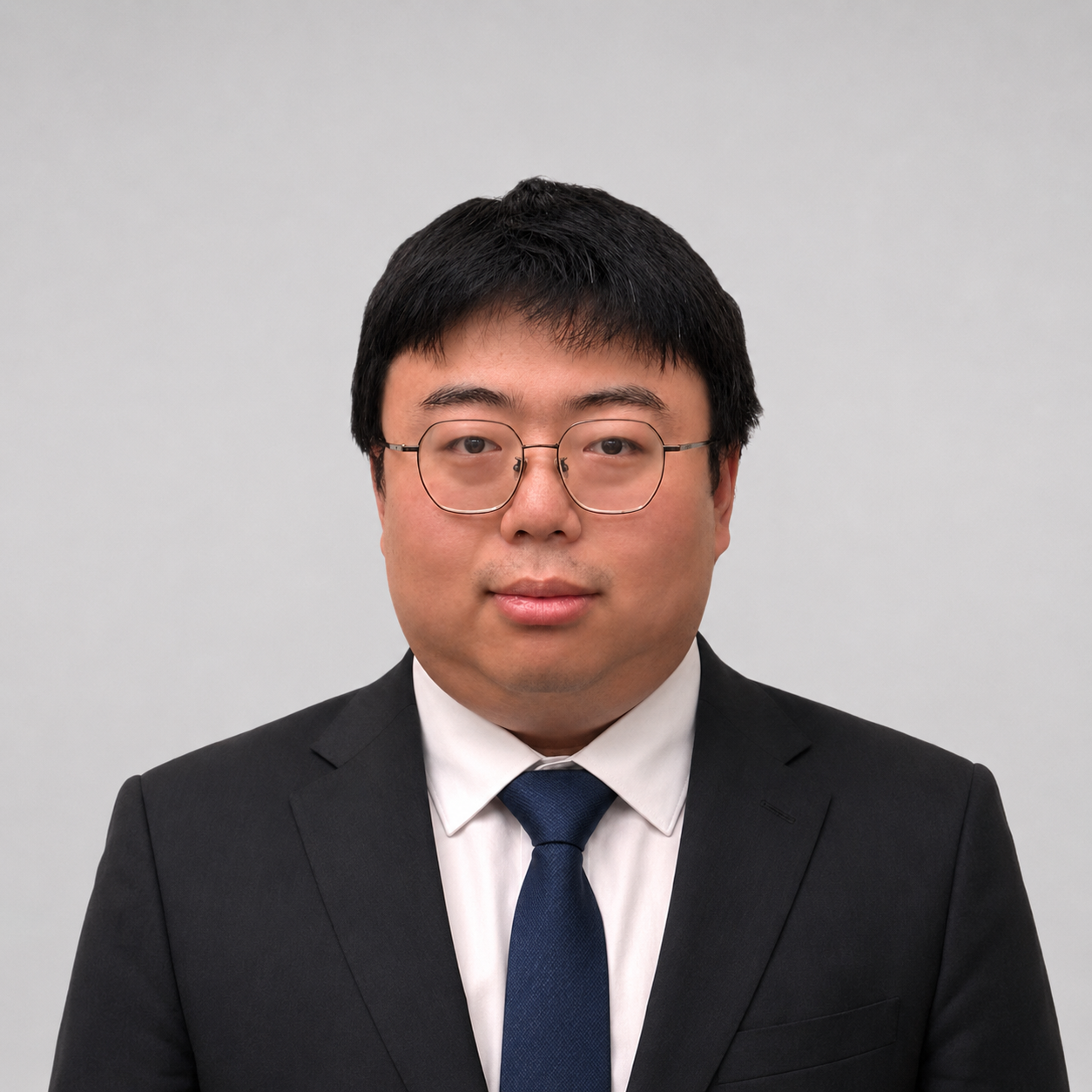
Chengpeng Wang

Chengpeng Wang 

Assistant Professor, National University of Singapore (NUS)

Email: wang-chengpeng@nus.edu.sg
             stephenw.wangcp@gmail.com

Address: COM1 #03-20, 13 Computing Drive, Singapore 117417

[ CV ] [ Publications ] [ Awards ] [ Teaching ] [ Service ] [ Misc ]

Bio

Chengpeng Wang is an Assistant Professor of Computer Science in the School of Computing at the National University of Singapore. His research sits at the intersection of software engineering, programming languages, and machine learning. He focuses on developing program analysis techniques that enhance the reliability and performance of modern software systems, with particular interests in AI-assisted software development and AI agents.

Before joining NUS, Chengpeng was a Post-Doctoral Researcher in the Department of Computer Science at Purdue University, working with Professor Xiangyu Zhang. He obtained his Ph.D. in Computer Science from the Hong Kong University of Science and Technology, where he worked with Professor Charles Zhang. Before that, he received his master's and bachelor's degrees from Tsinghua University.

Prospective Students

I am looking for Postdoctoral Fellows, Ph.D. students, Research Assistants, and interns to join my group at NUS. I am particularly interested in working with self-motivated students who are excited about program analysis, agentic software engineering, and agent security. If you are interested, please send me an email (wang-chengpeng@nus.edu.sg) with your CV.

News

  • news 📚 (Pinned) We are actively maintaining the paper list of Agentic Software Engineering (ASE). Welcome to star, fork, and contribute.
  • news (05/2026) I am co-chairing the student research competition track of FSE'27. Looking forward to your submissions.
  • news (05/2026) I am serving on the program committee of OOPSLA'27. Please consider submitting your work!
  • news (04/2026) I am serving on the program committee of FSE'27. Please consider submitting your work!
  • news (03/2026) Our work NESA, a neuro-symbolic Datalog-based static analysis framework, was accepted by FSE'26.
  • news (02/2026) I am serving on the program committee of ICSE'27. Please consider submitting your work!
  • news (11/2025) I released RepoSlice, an eduational framework of LLM-driven program slicing. Here is the tutorial.
  • news (11/2025) I was honored to receive the ASE 2025 Distinguished Reviewer Award.
  • news (09/2025) Our work RFCAudit was accepted by ASE'25. It has detected dozens of functional bugs in network protocol implementations. Congratulations to Mingwei!
  • news (09/2025) Our benchmark CoRe was accepted by NeurIPS'25 (Spotlight). It is a high-quality, human-verified benchmark designed to evaluate LLMs on fundamental static analysis tasks. Congratulations to Danning and Mingwei!
  • news (07/2025) We released the preprint of BugScope, an agent that learns to detect diverse bugs from examples. It beats Cursor BugBot and CodeRabbit, detecting 2× more real-world bugs with high precision. Check out the preprint for detailed comparisons!
  • news (05/2025) Excited to announce that RepoAudit was accepted to ICML 2025! It had successfully uncovered over 200 zero-day vulnerabilities in high-profile open-source projects. Welcome to explore our work through our preprint, code, and bug gallery.
  • news (03/2025) Our work on Protocol Parser Testing was accepted by ISSTA'25. Congratulations to Mingwei!
  • news (01/2025) I delivered an invited talk titled Advances in AI-powered Code Security to CodeQL team @ GitHub. Here are the slides and recording.
  • news (11/2024) I was invited to present LLM-aided static analysis at Boston Computation Club. Here are the slides and recording.
  • news (09/2024) Our work LLMDFA was accepted by NeurIPS'24.
  • news (09/2024) Our work LLMSAN was accepted by Findings of EMNLP'24.
  • news (04/2024) Our work GiantSan received Best Paper Award at ASPLOS 2024. Congratulations to Hao!
  • news (12/2023) I passed my Ph.D. defense and officially obtained Ph.D. degree on the last day of 2023!

Selected Publications [Full List]

  • Complexity-Guided Container Replacement Synthesis
    Chengpeng Wang, Peisen Yao, Wensheng Tang, Qingkai Shi, and Charles Zhang

    The ACM SIGPLAN Conference on Objected Oriented Programming, Systems, Languages and Applications (OOPSLA), Nov, 2022.

    ACM SIGPLAN Distinguished Paper Award

Awards

ASE Distinguished Reviewer Award, ACM SIGSOFT 2025

NeurIPS Spotlight Paper, NeurIPS 2025

Postdoc Travel Award, Purdue University, 2024

ACM SIGARCH Best Paper Award, ASPLOS 2024

UGC Research Travel Grant, HKUST, 2022~2023

Ant Group Outstanding Collaboration Award, 2023

ACM SIGPLAN Distinguished Paper Award, OOPSLA 2022

Teaching

CS 6215: Advanced Topics in Program Analysis, NUS, Fall 2026

CS 510: Software Engineering, Purdue University, Fall 2025

CS 592: AI and Security, Purdue University, Fall 2024

COMP 3021: Java Programming, HKUST, Spring 2022 & Fall 2022 & Spring 2023

COMP 4631: Computer and Communication Security, HKUST, Fall 2021

COMP 3111/H: Software Engineering, HKUST, Fall 2020

COMP 2011: Programming with C++, HKUST, Spring 2020

Haskell: Functional Language Programming, THU, Spring 2019

Automaton and Formal Logic, THU, Fall 2018

Service

Organizing Committee Member

FSE'27 SRC, LMPL'25

Program Committee Member

OOPSLA'27, LMPL'26, PAgE'26, FSE'27, ICSE'27, NeurIPS'26, ARR'26, PLDI'26, ISSTA'26, FSE'26, LLM4Code'26, NeurIPS'25, ASE'25, ISSRE'25, Forge'25, FSE'25, ISSTA'25, SPLASH'24 SRC, ASE'24 (industrial track), ISSRE'24, Forge'24

Journal Reviewer

ACM Transactions on Software Engineering and Methodology (TOSEM), IEEE Transactions on Software Engineering (TSE)
Communications of the ACM (CACM)

Artifact Evaluation Committee

OOPSLA'24, PLDI'23, FSE'22, ISSTA'22

Volunteer

Student Volunteer @ SPLASH 2022, Student Volunteer @ ISSTA 2019

Mentoring

Long-term mentor of SIGPLAN-M

Misc

Paper Collections: Agentic Software Engineering

Reference Books on Program Analysis: The Calculus of Computation, Data Flow Analysis: Theory and Practice, Static Program Analysis

Academic Writing References: Writing for Computer Science, The Elements of Style

Last modified: 2026.06